
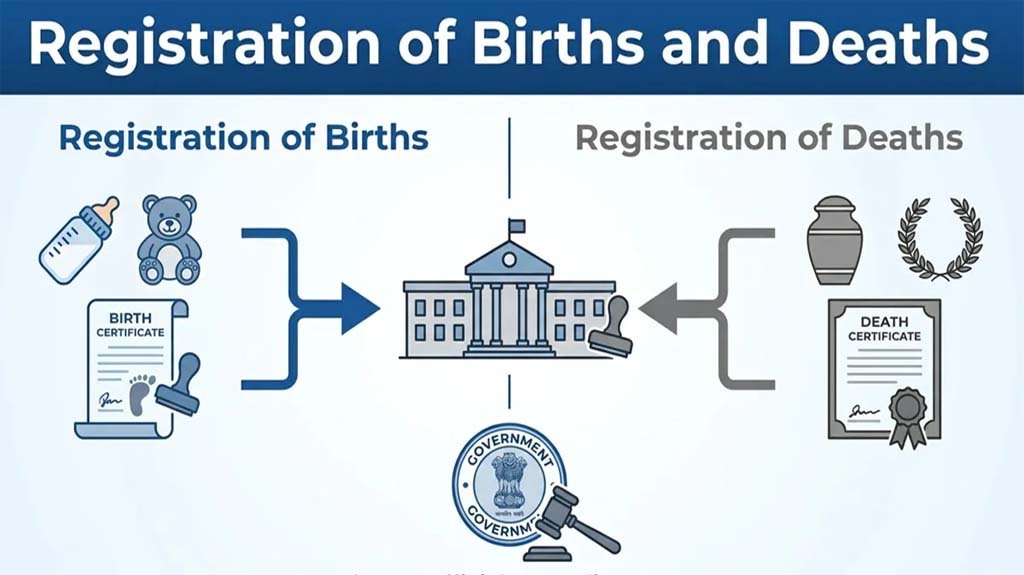
New Delhi: Registering a birth or death after a prolonged delay is set to become more difficult from October 1, 2026, with the Centre introducing stricter procedures for late registrations. Under the new rules, applications submitted more than two years after the event will require an order from a First-Class Judicial Magistrate.
The Centre has notified October 1 as the date on which the provisions of the Registration of Births and Deaths (Amendment) Act, 2026 will come into force. Registrar General of India Mrityunjay Kumar Narayan issued the notification on Wednesday.
Judicial scrutiny for registrations after two years
The amended law changes the procedure under Section 13(3) of the Registration of Births and Deaths Act, 1969.
If a person applies to register a birth or death more than two years after it occurred, the registration will now require an order from a Judicial Magistrate of the First Class. Such cases will therefore undergo judicial scrutiny instead of being handled solely through the regular administrative process.
For applications filed after one year but within two years of the birth or death, an order from a District Magistrate, Sub-Divisional Magistrate or an authorised Executive Magistrate will continue to be required.
Verification before registration
The amended provisions also require authorities to verify the authenticity and correctness of the reported birth or death before completing the registration, along with payment of the prescribed fee.
The government has said the tighter procedure is intended to encourage people to report births and deaths within the prescribed time and strengthen the reliability of official records.
Amendment becomes law after President’s assent
The Registration of Births and Deaths (Amendment) Bill, 2026, was passed by both Houses of Parliament before receiving the President’s assent last month, paving the way for the new provisions to take effect.
The Registration of Births and Deaths Act, 1969, provides the legal framework for recording vital events across the country. Birth and death certificates issued under the law serve as important legal documents and can be used as evidence to establish the birth or death of an individual.
The law was previously amended in 2023, with those provisions coming into effect from October 1 of that year. The latest changes further tighten the mechanism for delayed registration, particularly in cases where the delay exceeds two years.