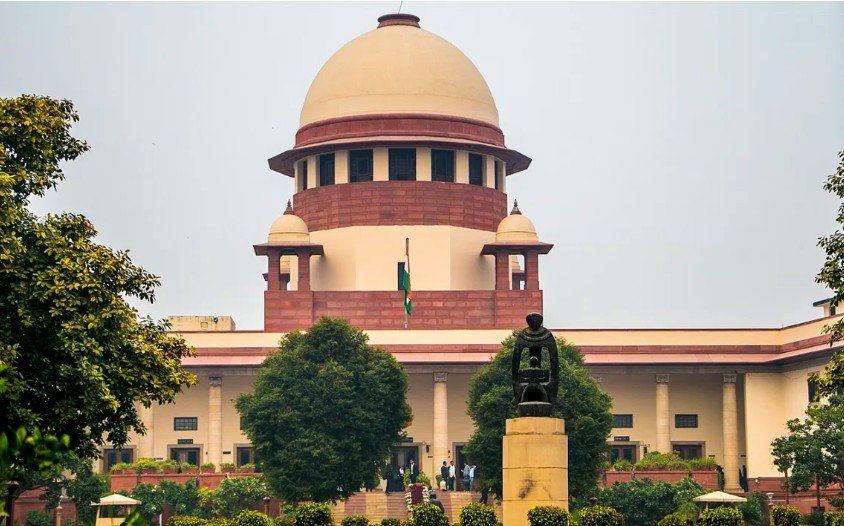
NEW DELHI: The Supreme Court has asked the Centre to examine whether statutory safeguards can be introduced to regulate social media accounts operated by children below 18 years of age.
A three-judge bench headed by Chief Justice of India Surya Kant, along with Justices Joymalya Bagchi and V. Mohana, was hearing a public interest litigation filed by the Just Rights for Children Alliance, which has sought stronger safeguards for children using social media and other digital platforms.
The petition raises concerns over the ability of minors to independently create accounts on social media platforms by accepting their terms of service. It argues that under Indian contract law, persons below 18 cannot independently enter into such contracts.
Parental Consent for Under-18 Accounts
A key demand before the court is that social media platforms should be required to obtain the consent of a parent or legal guardian before allowing a child below 18 to create an account.
The petitioners have also proposed identity verification or e-KYC mechanisms for parents or legal guardians, wherever necessary.
During the hearing, Justice Joymalya Bagchi expressed concern over children in the 12-to-15 age group being able to obtain social media accounts. He indicated that membership systems of social media platforms should be brought in conformity with Indian law and the applicable legal age threshold.
Can IT Rules Provide a Legal Framework?
The Supreme Court asked the Centre to examine whether the existing framework under the Information Technology Act and intermediary rules could be used to ensure that social media platforms comply with Indian law concerning minors.
The bench also considered whether such safeguards should have statutory force rather than remaining merely as guidelines.
Solicitor General Tushar Mehta, appearing for the Centre, told the court that the government would examine the issue. The government is also considering whether requirements such as parental consent could be addressed through the framework of the Digital Personal Data Protection law.
The petitioners, however, pointed to the timeline for the relevant data-protection provisions coming into force.
The court’s discussion comes amid wider concerns over the ability of children to access social media platforms without adequate safeguards. The Supreme Court is expected to consider the matter further.
Online Grooming and Cyberbullying Concerns
The petition argues that unrestricted access by children to social media without adequate safeguards can expose them to risks including online grooming, sexual exploitation, cyberbullying, misuse of personal information and exposure to age-inappropriate content.
The plea seeks a stronger legal framework to protect children in the digital environment and to ensure that social media intermediaries comply with Indian law.
The Supreme Court has asked the Centre to examine the issue within the existing statutory framework, including the possibility of introducing enforceable rules governing minors’ access to social media.