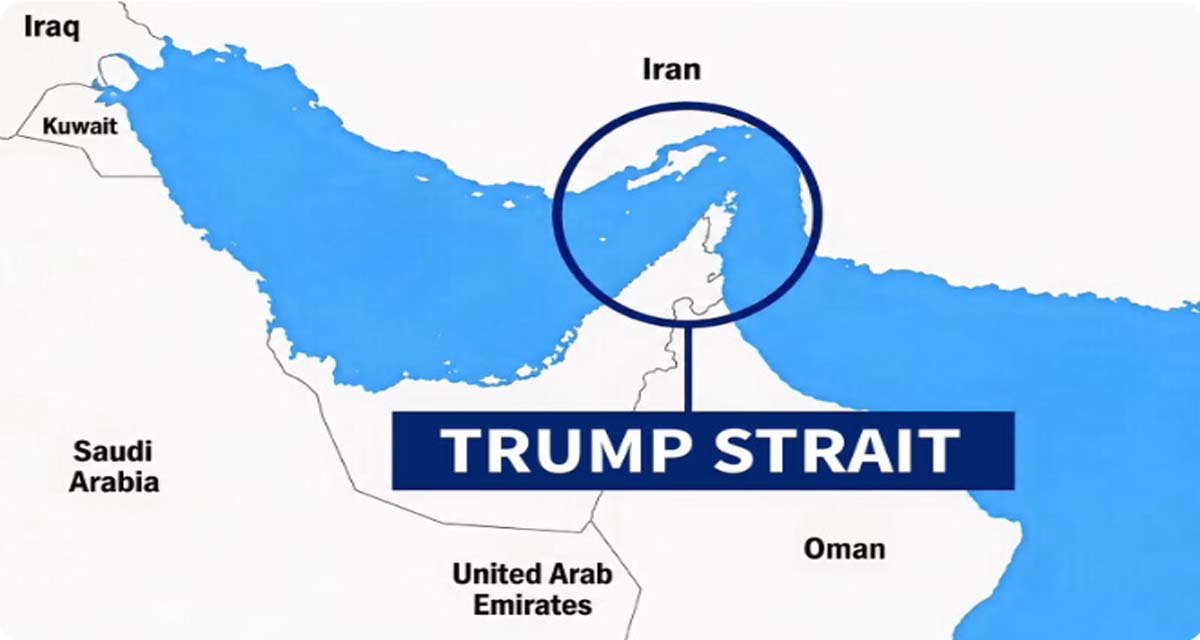
Washington: US President Donald Trump has shared a map on Truth Social depicting the Strait of Hormuz as the “Trump Strait,” shortly after reports that he rejected an Iranian proposal to reopen the strategically important waterway within seven days.
The map shows the Strait of Hormuz, located between Iran, Oman and the United Arab Emirates, marked with a target-like graphic and labelled “TRUMP STRAIT.” The waterway has not been officially renamed internationally; the term appeared on the map shared by Trump.
The post came amid renewed tensions between Washington and Tehran over the Strait of Hormuz and Iran’s nuclear programme.
Iran Offers Seven-Day Plan to Reopen Strait
Iranian Foreign Minister Abbas Araghchi said Tehran had conveyed a concrete seven-day plan to the United States through Qatar.
Under the proposal, Iran would reopen the Strait of Hormuz and restore normal maritime passage within seven days if Washington agreed to certain conditions, including lifting its naval blockade of Iranian ports, easing sanctions affecting Iranian oil exports and observing a ceasefire.
“If the necessary conditions are met, the strait can be reopened, and normal maritime passage restored within seven days,” Araghchi said at the United Nations. He added that the decision now rests with the United States.
Trump Reportedly Rejects Proposal
The proposal was reportedly rejected by Trump, according to reports citing US officials. The reports said Trump remains sceptical that Tehran would meet Washington’s demands and has indicated that further US military action against Iran remains possible.
Trump has previously suggested changing the name of the Strait of Hormuz. In an earlier Truth Social post, he asked whether the waterway should be renamed the “TRUMP STRAIT”, while claiming that it was under US control.
Why the Strait of Hormuz Matters
The Strait of Hormuz is one of the world’s most important energy shipping routes. A significant share of global oil and gas trade traditionally passes through the narrow waterway, making any disruption there a major concern for international energy markets.
Iran has linked the reopening of the strait to a reduction in US military pressure, the lifting of the blockade and renewed diplomatic negotiations over its nuclear programme.
The latest developments come as diplomatic efforts continue around the United Nations General Assembly amid the wider US-Iran conflict.