
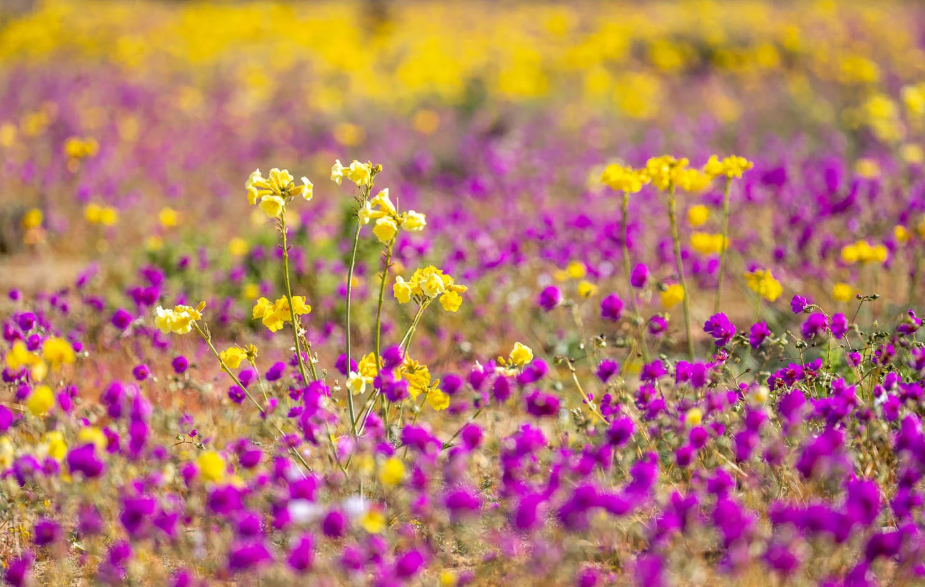
SANTIAGO: A rare natural spectacle is transforming Chile’s Atacama Desert, one of the driest regions on Earth, into a vast landscape of violet and white flowers following unusually heavy rainfall linked to El Niño.
Known as “Desierto Florido” or the “Flowering Desert,” the phenomenon occurs when dormant seeds and shoots buried beneath the desert soil receive enough moisture to germinate and bloom.
Chile’s National Forestry Corporation, CONAF, estimates that the soil of the Atacama contains seeds and underground plant structures belonging to around 200 plant species, waiting for suitable climatic conditions to emerge.
This year, unusually heavy rainfall has triggered the simultaneous germination and flowering of many of these plants, covering large stretches of the normally barren landscape with colourful blooms.
More Than 180 mm of Rain
Some parts of the Atacama have received more than 180 millimetres of rain during the current season. César Pizarro, head of CONAF’s Atacama Biodiversity Department, told AFP that such a high level of rainfall had not previously been recorded in the area.
The unusually deep penetration of rainwater into the desert sand is believed to have activated dormant plant life beneath the surface.
As violet, white and other coloured flowers spread across sections of the desert, the region has attracted tourists, photographers and nature enthusiasts eager to witness the rare transformation.
Flowering Could Peak in October
According to CONAF’s projections, the current flowering season is expected to reach its peak in October.
Authorities estimate that around 15,000 hectares of the Atacama could eventually be covered by flowering plants, potentially turning vast stretches of the arid landscape into a seasonal carpet of colour.
El Niño is associated with unusually warm surface waters in the tropical Pacific Ocean near the equator. The climate phenomenon can alter wind and rainfall patterns across different parts of the world, bringing unusually heavy rain to some regions while contributing to drought in others.
The Atacama’s spectacular bloom, however, comes alongside the damaging effects of the intense rainfall experienced in parts of Chile. Reports say 13 people were killed and around 4,000 homes were damaged during heavy rains in July.
For now, the Flowering Desert is offering a striking reminder of how dormant life can respond when one of the planet’s driest landscapes receives an extraordinary burst of moisture.