
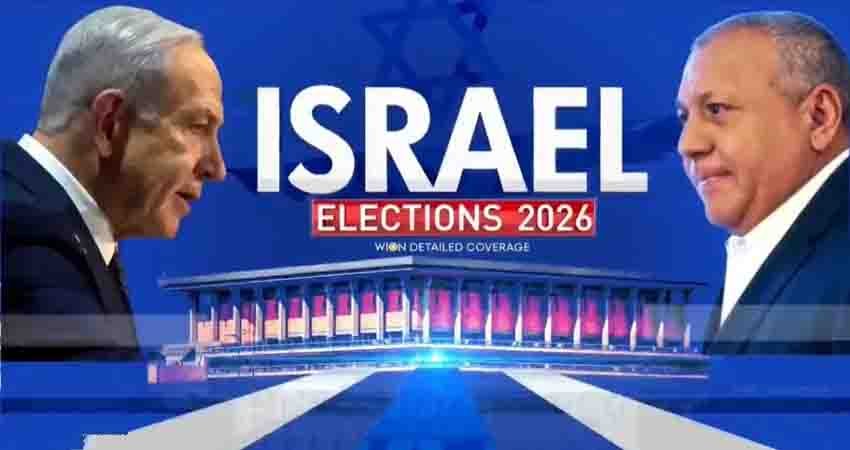
Tel Aviv: Israel is heading towards a crucial election in the aftermath of the October 7, 2023, Hamas attack and the subsequent war in Gaza. Prime Minister Benjamin Netanyahu and his right-wing coalition are expected to face a strong challenge from anti-government sentiment, with the outcome likely to shape the country’s political future and Netanyahu’s hold on power.
The election comes after the Hamas attack exposed serious questions about Israel’s security arrangements and triggered a prolonged conflict. The political fallout from the attack and the war is expected to weigh heavily on the electoral contest.
Around 500,000 new voters are reportedly expected to cast their ballots for the first time. Netanyahu, 77, who has served as prime minister for extended periods since 1996, faces a significant challenge in his bid to remain in office.
Final opinion polls suggest a close contest between Netanyahu’s Likud Party and the opposition bloc led by former military chief Gadi Eisenkot.
Some surveys predict that Likud, which currently holds 32 seats, could see its strength fall to just 19 seats. The opposition bloc led by Eisenkot, meanwhile, could secure as many as 20 seats, according to the projections.
However, Israel’s complex coalition politics means that the number of seats won by individual parties alone will not determine who forms the next government. The ability to secure the support of other parties will be crucial in determining the outcome. Ahead of the election, Netanyahu has claimed that he enjoys the support of US President Donald Trump.
Reports have also attributed to Netanyahu the argument that Trump would be prepared to eliminate the Iranian threat completely only if Netanyahu remained in power.
With security concerns, the war in Gaza, relations with the United States and coalition arithmetic all shaping the political debate, the election is set to be a major test of Netanyahu’s leadership and his ability to retain power.