108-day cultural festival to begin on December 4; historic landmarks across the national capital to become venues for art and design
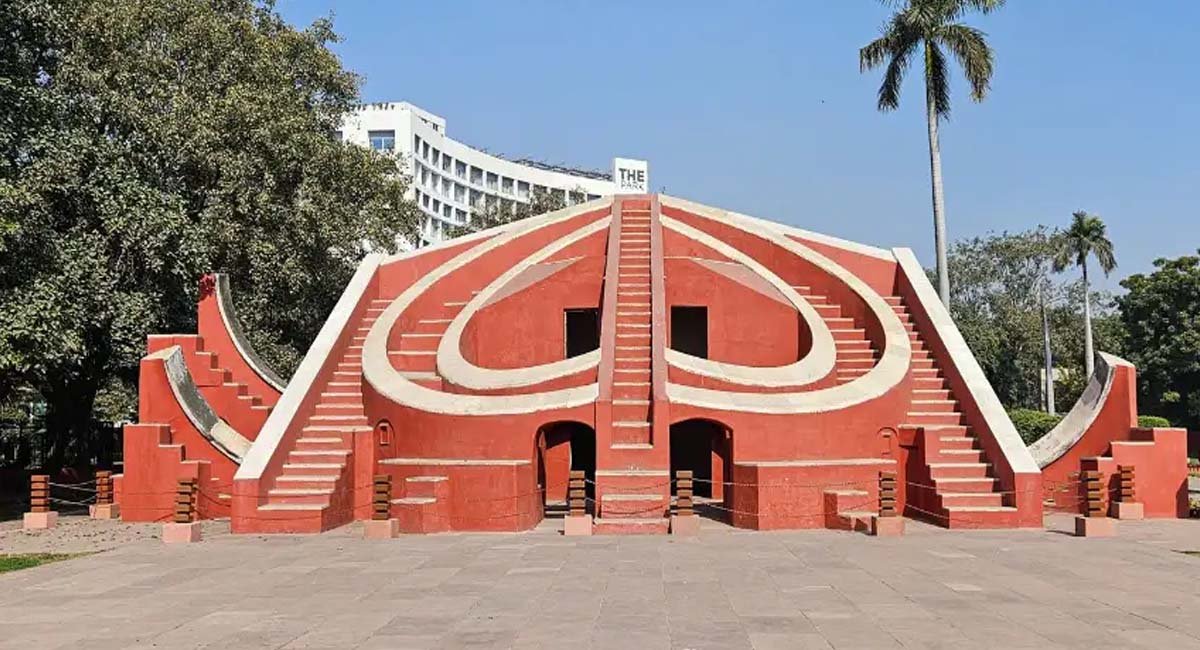
New Delhi: Jantar Mantar, one of India’s most prominent protest sites, is set for a new identity as a major venue for the India Biennale 2026. The development comes days after Delhi Police removed the historic location from the list of designated protest sites. The 108-day cultural festival will run from December 4, 2026, to March 21, 2027.
The India Biennale 2026 aims to bring together art, architecture and design through exhibitions and cultural events at historic monuments, museums, galleries and public spaces across the national capital. Artists from India and abroad are expected to participate in the event.
According to reports, nine countries, including France, Italy, Hungary, Switzerland and Sri Lanka, have confirmed their participation.
From a protest hub to a cultural destination
Built in the 18th century, Jantar Mantar was originally established as an astronomical observatory. Over the past several decades, however, it has become widely known as a venue for political demonstrations, public protests and social movements.
Its location close to Parliament and key government offices made it an important gathering point for organisations and groups seeking to draw the attention of the authorities to their demands.
Delhi Police removed Jantar Mantar from the list of designated protest sites through an order issued on October 11. The decision was reportedly based on recommendations made by a committee appointed by the Union Home Ministry.
Following the decision, Ramlila Maidan in central Delhi, Burari Ground in north Delhi and CBD Ground in east Delhi were designated as alternative venues for protests.
Historic landmarks to host the biennale
The India Biennale 2026 will extend beyond Jantar Mantar, with several iconic landmarks across Delhi expected to host cultural events. These include the Red Fort, Qutub Minar, Purana Qila, Humayun’s Tomb, Hauz Khas, Agrasen ki Baoli, Lodhi Garden and Safdarjung Tomb.
Major cultural institutions, including the National Museum, National Gallery of Modern Art, Lalit Kala Akademi, Sangeet Natak Akademi and Indira Gandhi National Centre for the Arts, are also part of the venue network.
The event follows the first India Art, Architecture and Design Biennale, held at the Red Fort in 2023. The 2026 edition aims to expand opportunities for artistic exchange and international cultural collaboration.
Relief for traders and residents?
Jantar Mantar’s transition from a prominent protest venue to a cultural destination marks a significant change in the use of a historic public space. The move could bring new visitors and cultural activity to the area while reducing some of the disruptions associated with large demonstrations.
However, the actual impact on local traders, residents and public movement remains to be seen. The relocation of protests to designated grounds elsewhere in Delhi may also influence how demonstrations affect surrounding neighbourhoods.
With the India Biennale scheduled to run for 108 days, Jantar Mantar is poised to feature in a different public narrative—one centred on art, heritage and cultural engagement.