New Delhi: India is making significant strides in indigenous defence technology, with new systems designed to operate across maritime and aerial environments. These include an autonomous boat capable of travelling 1,500 kilometres at sea without a crew, an uncrewed aerial vehicle designed to carry a human passenger and a high-altitude drone launch system.
The projects include Matangi and Varuna, developed by Pune-based Sagar Defence Engineering, and a stratospheric uncrewed aircraft developed by aerospace startup Kalam Labs. These innovations highlight India’s efforts to expand domestic capabilities in autonomous maritime and aerospace technologies.
Matangi is an autonomous surface vessel developed by Sagar Defence Engineering. Designed to travel long distances without onboard personnel, the vessel completed a journey of approximately 1,500 kilometres from Mumbai to Thoothukudi in Tamil Nadu in 2024.
The voyage demonstrated the vessel’s ability to cover a substantial distance without direct human intervention during the journey. Matangi uses technologies such as autonomous navigation and collision-avoidance systems. These capabilities help the vessel determine its route, assess its surroundings and navigate safely while travelling at sea. Such autonomous surface vessels could have applications in maritime surveillance, monitoring and other naval operations, depending on their final configuration and operational requirements.
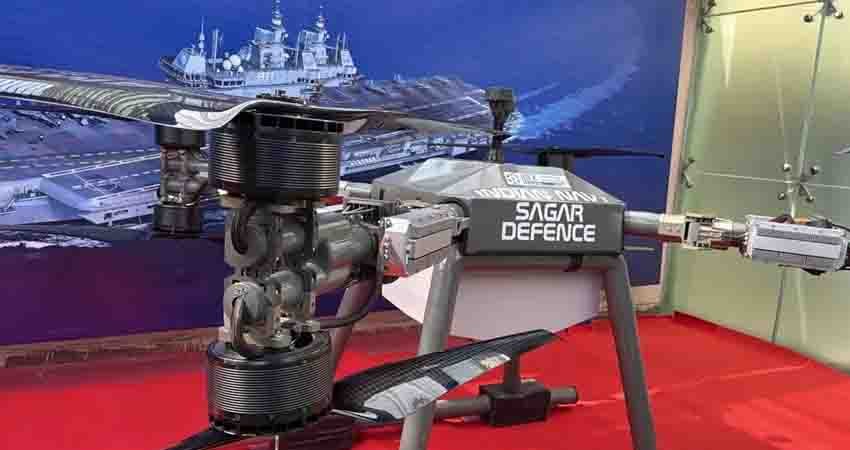
Varuna is an uncrewed aerial vehicle developed by Sagar Defence Engineering and designed to carry a human passenger. Prime Minister Narendra Modi witnessed a demonstration of the system during the Indian Navy’s Swavlamban programme in July 2022. According to available reports, Varuna has a payload capacity of around 150 kg and features systems that enable autonomous take-off and landing.
The technology could potentially support naval logistics, including the transportation of essential supplies between ships and the delivery of assistance during emergencies. Similar systems could also have future applications in medical evacuation and specialised transportation, subject to further development, testing and operational requirements.
Another development attracting attention is a stratospheric uncrewed aircraft system developed by aerospace startup Kalam Labs. The system uses a balloon to carry the aircraft to a high altitude before launching it into flight. According to company information, the balloon-based system can reach heights of more than 118,000 feet before deploying the uncrewed aircraft.
This approach differs from conventional drone launches and offers an alternative method for deploying aircraft from the upper reaches of the atmosphere. The technology could open up new possibilities for high-altitude aerial operations, although its practical applications would depend on further testing and the capabilities demonstrated by the system. The development of autonomous vessels, uncrewed aircraft and high-altitude launch systems reflects India’s growing interest in advanced domestic defence technologies.
Systems that can operate with limited direct human intervention could create new possibilities for maritime missions, logistics and specialised aerial operations. Their effectiveness, however, will depend on reliability, safety, testing and integration into existing defence systems. The projects represent an important step in exploring indigenous technological solutions for India’s evolving maritime and aerospace requirements.